

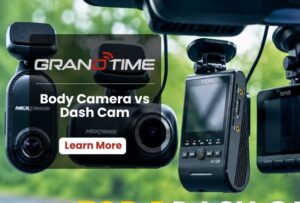
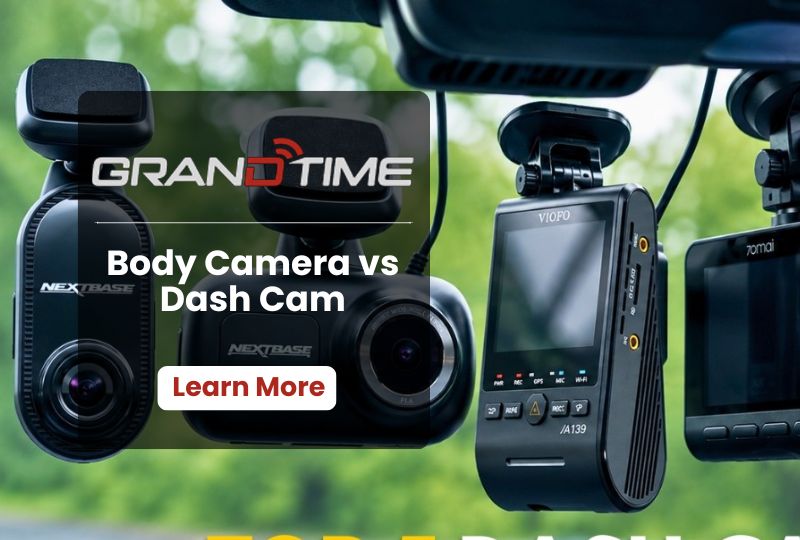
Police departments, security teams, and field crews rely on video evidence more than ever. Two tools dominate that conversation: the body camera and the dash cam. They both record what happens during a shift, but they capture very different parts of the story.
If you are choosing equipment for your team, understanding how these two devices differ helps you avoid gaps in coverage. This guide breaks down the difference between a body camera and a dash cam, when each one works best, and why most agencies end up using both.
What Is a Body Camera?
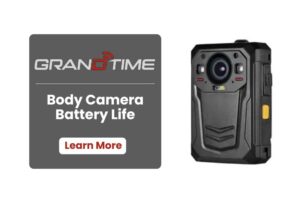
A body camera, also called a body-worn camera or BWC, is a small recording device clipped to an officer’s uniform, chest strap, or shoulder. It moves with the wearer, so it captures a first-person view of every interaction, whether that happens on a sidewalk, inside a building, or during a foot pursuit.
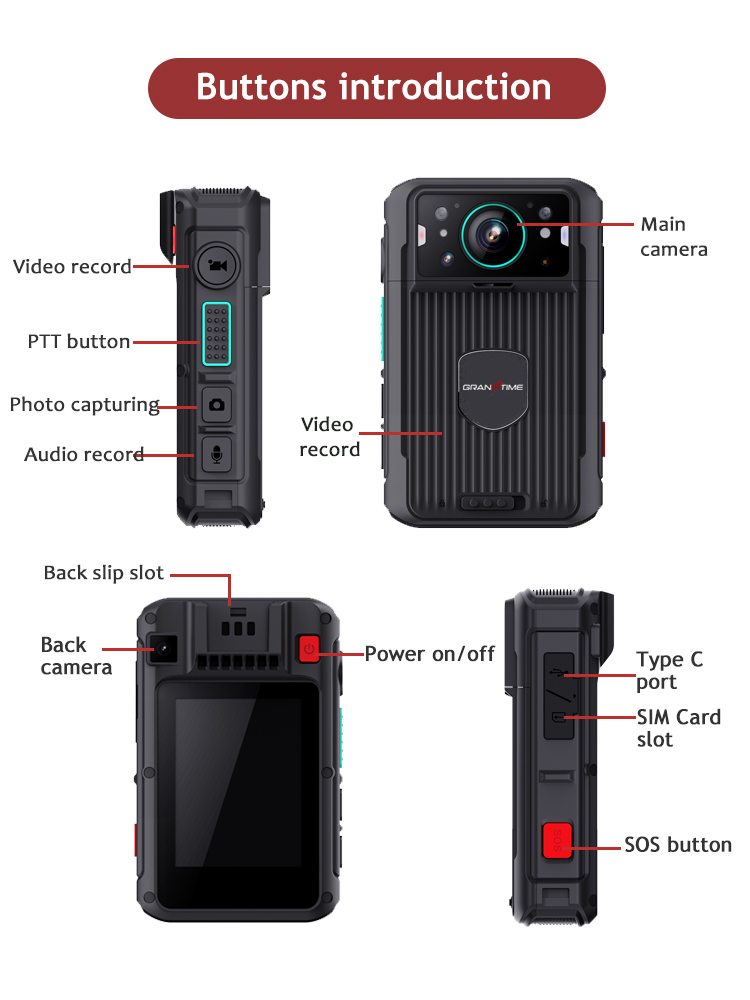
Because the camera travels with the person, it keeps recording once someone steps out of a vehicle. This is the biggest functional gap that dash cams cannot fill on their own.
Most modern body cameras include:
- HD or 4K video recording
- Night vision or low-light sensors
- GPS tagging for location data
- Manual and automatic activation triggers
- Secure onboard or cloud storage for evidence
What Is a Dash Cam?
A dash cam, short for dashboard camera, mounts inside a vehicle, usually on the windshield or dashboard. It records a forward-facing, third-person view of the road ahead. Some models also include a rear-facing lens to cover the vehicle interior or backseat.
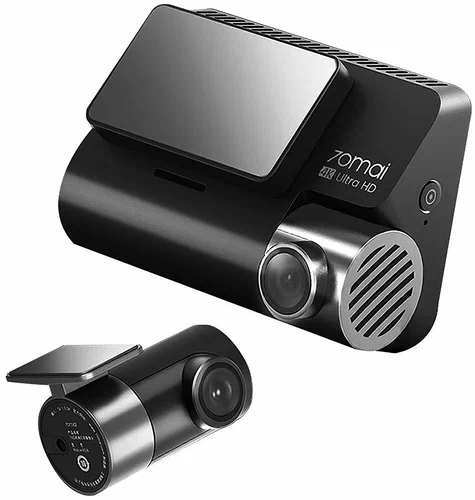
Dash cams excel at documenting traffic stops, pursuits, and collisions from a stable, wide-angle perspective. Many units start recording automatically when the engine turns on, when emergency lights activate, or when the vehicle reaches a set speed, which removes the need for the driver to remember to hit record.
Common dash cam features include:
- Wide-angle or 360-degree lenses
- Automatic activation tied to vehicle systems
- Continuous loop recording
- Impact or collision sensors
- Integration with in-car computer systems
Comparing Body Camera vs Dash Cam
1. Perspective and Field of View
A 4G body camera provides a first-person perspective that follows the wearer’s movement and attention. A dash cam offers a fixed, third-person perspective anchored to the vehicle. Neither view is inherently better. They simply document different angles of the same event.
Interestingly, research on this topic found that viewers judge the same incident differently depending on which camera captured it. Body cam footage of an incident results in lower observer judgments of intentionality than dash cam footage of the same incident, largely because the officer is less visible in their own body cam footage than they are in a dash cam recording. This makes camera choice relevant not just for coverage, but for how footage may be interpreted later.
2. Mounting and Mobility
Body cameras stay with the person, not the vehicle. This makes them essential for foot patrols, building entries, traffic stops that move away from the car, and any encounter that happens outside a vehicle’s field of view.
Dash cams are fixed to the vehicle. Once someone exits the car, the dash cam can no longer see or hear what happens next. This single limitation is why body cameras and dash cams are usually treated as complementary rather than interchangeable.
3. Activation Method
Dash cams often activate automatically, triggered by ignition, emergency lights, sirens, or speed thresholds. This reduces the risk of missed footage due to human error.
Body cameras work on manual activation, though many newer models support automatic triggers linked to holster removal, weapon draws, or a paired vehicle system. Departments should weigh activation policy carefully, since manual activation places responsibility on the wearer to start recording in time.
4. Durability and Environment
Dash cams live inside a vehicle, which shields them from weather, drops, and physical impact, so their designs tend to be less rugged by comparison. Body cameras face harsher daily conditions. They get bumped, rained on, and worn during physical exertion, which is why rugged housings, IP-rated water resistance, and shock protection matter more for wearable devices.
5. Evidence and Storage Management
Both device types generate video evidence that needs a secure chain of custody. Dash cam footage typically transfers to an in-vehicle server or a docking station at the station. Body camera footage usually docks and uploads to a digital evidence management platform, where it is tagged, categorized, and retained according to department policy.
Storage capacity, upload speed, and encryption standards matter for both, but body camera footage often carries added scrutiny since it captures closer, more personal interactions with the public.
When to Use a Body Camera
Body cameras are the better choice when:
- Officers or field workers move frequently between vehicles, buildings, and open areas
- The job involves direct public interaction, such as patrol, security, or inspections
- Documentation needs to include what the wearer sees and hears in real time
- Teams need live streaming back to a command center during active incidents
Construction supervisors, utility field crews, and security guards use body-worn cameras for the same reason police departments do. It creates an accurate, first-person record of site conditions, safety compliance, and incidents as they happen.
When to Use a Dash Cam
Dash cams make more sense when:
- The primary concern is documenting what happens on the road, such as traffic stops or collisions
- Continuous, hands-free recording is a priority
- The vehicle itself is the main point of interaction, such as pursuits or roadside assistance
- Departments want automatic activation tied to vehicle systems rather than manual triggers
Why Most Agencies Use Both
Relying on a single camera type leaves a documentation gap. Dash cams miss everything that happens once someone leaves the vehicle. Body cameras cannot capture a wide, stable view of a moving pursuit the way a vehicle-mounted lens can. Departments that pair both technologies get overlapping coverage that holds up better during investigations, court proceedings, and internal reviews.
This is also why some manufacturers now build docking systems that manage footage from multiple device types in one place, cutting down on separate software platforms and simplifying evidence retrieval.
At Grandtime, we design rugged body-worn cameras for law enforcement, security, and industrial field teams, with 4G and 5G models built for real-time streaming and long-shift battery life. If your team is weighing camera options, our body-worn camera lineup is a good place to start.
Body Camera vs Dash Cam: Quick Comparison
| Feature | Body Camera | Dash Cam |
|---|---|---|
| Perspective | First-person, wearer’s view | Third-person, vehicle view |
| Mobility | Moves with the person | Fixed to the vehicle |
| Best for | Foot patrols, close interactions, building entries | Traffic stops, pursuits, road incidents |
| Activation | Mostly manual, some automatic | Mostly automatic |
| Durability needs | High, worn on the body | Moderate, protected inside a vehicle |
| Coverage gap | Loses view once out of frame of the body | Loses view once someone exits the vehicle |
Frequently Asked Questions
Can a body camera replace a dash cam?
Not fully. A body camera covers what happens near the wearer, but it cannot replicate a dash cam’s wide, stable view of the road during a pursuit or traffic incident. Most departments use both to close coverage gaps.
Which camera gives better evidence in court?
Neither is universally better. Courts and reviewers weigh both types of footage based on what part of an incident they capture. Some studies suggest viewers form different judgments of intent depending on which camera recorded the event, so context matters more than camera type alone.
Do dash cams record when the car is off?
It depends on the model. Many dash cams support parking mode, which records short clips triggered by motion or impact even when the vehicle is off, though this uses a separate power source or battery.
How long does body camera footage need to be stored?
Retention periods vary by department policy and state law, ranging from a few months for routine footage to several years for footage tied to use-of-force incidents or active investigations.
Are body cameras waterproof?
Most professional-grade body cameras carry an IP54 to IP67 rating, meaning they resist rain, dust, and splashes. Always check the specific rating before use in heavy rain or wet environments.