
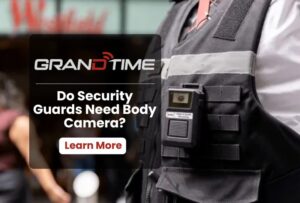
Security guards are not legally required to wear body cameras in most of the United States, but a growing number of security firms are equipping their teams with them anyway. The reason is simple. Guards work alone, often at night, and frequently deal with people who are angry, intoxicated, or looking for a confrontation. A body camera provides an unbiased record of what actually happened, protecting both the guard and the company that employs them.
This post breaks down why security companies are adopting body worn camera F2s, what the law actually says about recording consent, and what to think about before rolling them out to your team.
Quick Answer😊
There is no federal law that forces private security guards to wear body cameras. Requirements only exist in specific contracts, state regulations for certain licensed roles, or client agreements, such as guarding a courthouse or a school district that mandates recording. Outside of those cases, the decision is up to the security company or the property owner. Most firms that adopt bodycams do it voluntarily because the return in reduced disputes and safer shifts outweighs the equipment cost.
Why Security Companies Are Adding Body Cameras
1. They create an independent record of incidents
When a confrontation happens, it usually comes down to one person’s word against another’s. A body camera removes that guesswork. If a guard has to detain a shoplifter, break up a fight, or respond to a false accusation, the footage shows exactly what occurred instead of relying on memory or conflicting statements.
2. They tend to reduce confrontations before they escalate
People generally behave differently when they know they are being recorded. Guards who wear visible cameras often report fewer verbal altercations, since the camera itself acts as a deterrent. This mirrors research on police body-worn cameras, where visible recording has been linked to fewer complaints and calmer interactions overall.
3. They protect guards from false claims
Security work carries real physical risk. Industry surveys consistently find that a large share of guards experience verbal abuse on a regular basis, and physical altercations are not rare. Some guards have even been assaulted with weapons while on duty. Recorded footage protects a guard’s account of events if a client, bystander, or attacker later disputes what happened.
4. They limit company liability
If a security firm is sued over a guard’s conduct, footage from a body camera can settle the dispute quickly instead of dragging into a lengthy investigation. This matters even more for firms working in retail, healthcare, or transit, where the risk of lawsuits over use of force or wrongful detainment is higher.
5. They double as a training tool
Reviewing real footage from the field helps supervisors coach guards on de-escalation, patrol procedure, and report writing. It turns every shift into a potential training example instead of relying only on incident reports written after the fact.
Are Security Guards Legally Allowed to Wear Body Cameras?
Yes. Wearing a body camera as a private citizen or a licensed security guard is legal across the country. The more complicated part is audio recording consent, which varies by state.
Federal wiretapping law only requires one-party consent, meaning the person operating the recording device counts as the consenting party. Most states follow this same one-party consent standard, but a smaller group of states require consent from everyone being recorded.
In practice, this rarely means a guard has to stop and ask permission before turning on a camera. Consent can often be implied when the person being recorded can see the camera, or when clear signage on the property states that the area is under video and audio surveillance.
A few points worth keeping in mind when setting policy:
- Video-only recording carries far less legal risk than audio, since most consent laws are built around recorded conversations rather than images.
- Recording in areas where people expect privacy, such as restrooms or private offices, should generally be avoided regardless of state law.
- Posting visible signage that recording is in progress is a simple way to reduce disputes over consent in states with stricter rules.
- Security firms operating across multiple states should build their recording policy around the strictest applicable state law rather than assuming one national standard applies.
None of this replaces legal advice specific to your state and industry, but it gives a starting framework for building a compliant policy.
Which Industries Are Adopting Security Body Cameras
Body cameras started in law enforcement, but the same reasoning now applies well beyond policing. Retail loss prevention teams use them to document theft and prevent disputes over detainment. Hospitals and healthcare facilities use them for security staff dealing with unpredictable patients or visitors. Schools and universities use them for campus security during large events. Construction sites and industrial facilities use similar wearable cameras for both safety documentation and incident review, since the same core hardware that works for a security guard also works well for a site supervisor or safety officer.
What to Look for in a Security Guard Body Camera
Not every camera built for consumers or hobbyists holds up to a full shift of security work. When evaluating options, look for:
- Battery life that covers a full shift. A 12-hour shift needs a camera rated for that duration, not just a couple of hours of continuous recording.
- Durability and weather resistance. Guards work outdoors, in vehicles, and sometimes in physical altercations, so the housing needs to handle drops and rough conditions.
- Night vision and low-light recording. A large share of security incidents happen after dark, so clear footage in poor lighting is essential.
- Secure, encrypted storage. Footage often becomes evidence, so it needs protection from tampering or unauthorized access.
- GPS tracking. Useful for verifying patrol routes and confirming a guard’s location during an incident.
- Docking stations for fleet management. Firms managing dozens of cameras need a way to charge and offload footage efficiently at shift change, rather than handling each device manually.
- Live streaming capability. For higher-risk assignments, a camera that can stream to a control room in real time adds another layer of support during an active incident.
This is one area where Grandtime’s body-worn camera lineup fits well, since the devices are built with long battery life, GPS positioning, and secure docking stations designed for exactly this kind of fleet deployment.
Common Concerns About Security Guard Body Cameras
- Body cameras are not a decision without trade-offs. A few concerns come up often when firms consider adding them.
- Cost. Beyond the camera itself, there is training time, docking infrastructure, and ongoing data storage to budget for.
- Privacy. Guards working inside private businesses need clear guidelines on when to record and when to pause, especially around restrooms, changing areas, or private offices.
- Employee pushback. Some guards may feel micromanaged by constant recording. Clear communication about why the policy exists, and that it protects the guard as much as the employer, usually reduces resistance over time.
- Data management. Someone needs to own the process of reviewing, storing, and eventually deleting footage in line with company policy and any applicable state retention rules.
None of these are reasons to avoid body cameras altogether, but they are worth planning for before a rollout rather than after.
Frequently Asked Questions
Do all security guards have body cameras?
No. Body cameras are common in the industry but not universal. Adoption depends on the security firm, the client’s requirements, and the specific role.
Can a security guard record you without asking?
In most states, yes, as long as only video is captured or the state follows one-party consent for audio. Some states require all-party consent for audio recording, which changes the rules for those situations.
Do body cameras actually reduce incidents?
Evidence from law enforcement and early adopters in the security industry suggests visible cameras do reduce confrontations, since people tend to behave differently when they know they are being recorded.
What is the difference between a security body camera and a police body camera?
The hardware is often similar, but security-focused cameras usually prioritize body cameras with longer battery life and easier fleet charging over the strict chain-of-custody features police departments require for court evidence.
How long should security guard footage be stored?
This depends on company policy and any applicable state law, but many firms store standard footage for 30 to 90 days and retain incident-related footage longer in case it is needed for a legal or insurance claim.
Summary
Security guards do not need body cameras to do their job, but the evidence keeps pointing toward better outcomes for firms that use them. Fewer disputes, safer shifts, and a clear record when something does go wrong make a strong case for adoption, even without a legal mandate behind it. The main work is building a sensible recording and consent policy that fits your state and your client base, then choosing hardware that can actually survive a full shift in the field.