


AI + AR (Augmented Reality) glasses, as the next-generation human-computer interaction platform, are reshaping the way we work across multiple industries. Here are some key application areas and specific examples:
I. Industry and Manufacturing
* Remote Collaboration and Guidance
Frontline workers wear AR glasses, and experts remotely guide equipment repair and assembly processes through real-time audio and video + AR annotations.
For example: In Toyota car repair, Microsoft HoloLens engineers use virtual arrows to guide operating steps.
* Digital Workflows
AR glasses project holographic flowcharts, guiding workers to complete complex assemblies sequentially, reducing error rates.
For example: Boeing uses AR glasses to guide aircraft wiring harness assembly, improving efficiency by 25% and reducing error rates by 50%.
* Equipment Inspection and Data Visualization
When inspectors look at equipment, the glasses automatically display sensor data (temperature, pressure, etc.), with abnormal data highlighted as a warning.
For example: Siemens overlays 3D models of equipment with real-time data to assist in troubleshooting.
II. Healthcare
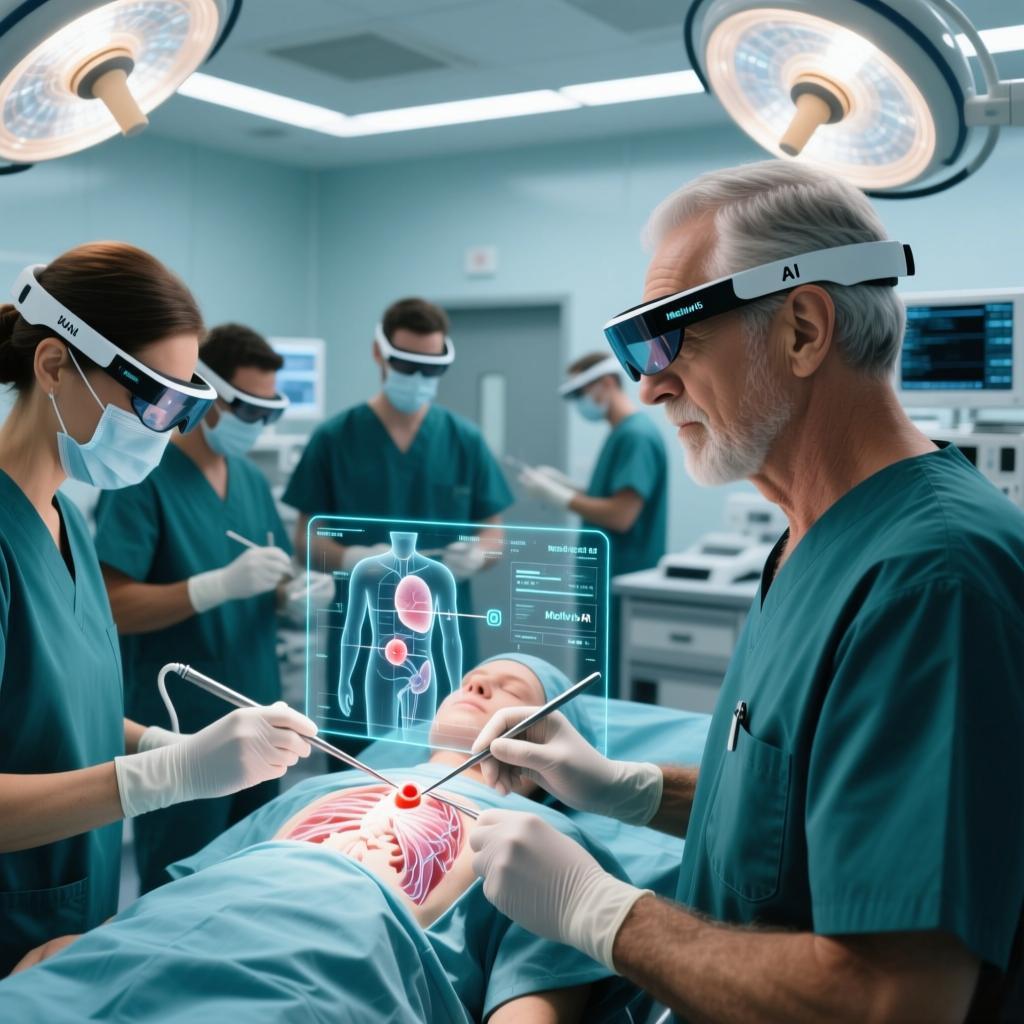
* Surgical Navigation
Doctors wear AR glasses, and patient CT/MRI images are overlaid in 3D on the surgical site for precise lesion localization.
For example: Case Western Reserve University developed an AR system to assist in screw placement during spinal surgery.